Be yourself; Everyone else is already taken.
— Oscar Wilde.
This is the first post on my new blog. I’m just getting this new blog going, so stay tuned for more. Subscribe below to get notified when I post new updates.
Be yourself; Everyone else is already taken.
— Oscar Wilde.
This is the first post on my new blog. I’m just getting this new blog going, so stay tuned for more. Subscribe below to get notified when I post new updates.
27th November 2015 was the day the international cricket first witnessed the pink ball as it was the first ever day/night test match played at one of my favorite cricket grounds; the Adelaide Oval between Australia and New Zealand. Day/night test cricket was introduced for two reasons; firstly in order to increase the popularity of test cricket and secondly in order to make up for the time lag between the various cricket playing nations. For instance, Australia and New Zealand are ahead in time compared to the other nations and therefore if they play a day/night test with any of those nations, the viewers of those nations (India, South Africa, Sri Lanka, etc) could view the maximum part of the test match. The success of the first ever day/night test helped to spread the concept across the globe.

The day/night test is also called as “Pink Ball Test” as in the d/n test matches a pink ball is used instead of the traditional red ball. This is because the red ball under the floodlights takes a brownish color which makes it very similar to the color of the pitch in those conditions. The pink ball on the other hand gives a better visibility to the players and also deteriorates slower than the red ball which makes a pink ball better than the red ball to use in d/n test matches. Before the pink ball, tests were conducted on the orange ball, which was initially planned to be used in d/n test matches but the orange ball failed due to visibility issues and thus pink ball was finally decided to be used.
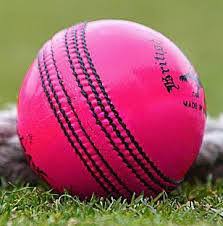
Test cricket has witnessed 11 (completed) pink ball tests with India currently playing their first ever pink ball test against Bangladesh, who are also playing their first pink ball test. Sri Lanka and Bangladesh are the only three full time members who are yet to host the pink ball test on their home turf.
From the pink ball tests played so far it has been witnessed that majority of them have been low scoring games clearly showing that it is not easy for the batting side when it comes to the pink ball and further tests the patience and temperament of the batsmen. Only time can say how successful or unsuccessful will the future of the pink ball test be under the era of modern day cricket.
The ICC World Test Championship 2019-2021 is the inaugural edition of the league based test cricket tournament run by the International Cricket Council (ICC), which started on 1st August 2019 with the 1st Test of the Ashes (England vs Australia) at Edgbaston, Birmingham and will end on 14th June 2021 at the iconic Lord’s Cricket Ground which will host the Finals of the tournament. The main idea behind this tournament is “Reviving Test Cricket” which is found to be dying in the era of the shortest version of the game.
Unlike T20 and ODI cricket, Test cricket lacked an ICC tournament, which could give the players a motivation to achieve something big in the longest format of the game. Players started to give preferences to domestic T20 leagues over international cricket which raised serious concerns over the sustainability of test cricket. But with the introduction of the ICC World Test Championship, each team is geared up to be crowned champion in the ultimate test.

The most unique thing about this tournament is that it awards consistency as it runs for a span of 2 years and there is no easy way out in this tournament. Also another advantage it provides is that it does not favor any single team (home advantage) as all the participating teams will be scheduled to play home as well as away series. There are 9 participating teams in this tournament: Australia,Bangladesh, England, India, New Zealand, Pakistan, South Africa, Sri Lanka and West Indies. Each time is scheduled to play six out of the eight opponents and will not play the remaining two opponents. For example India will not play Pakistan and Sri Lanka; South Africa will not play Bangladesh and New Zealand and so on, thus giving fair opportunities to every team.
Point system: Each series played under the test championship will carry 120 points irrespective of the number of matches in the series, and the number of points per match are divided accordingly. A win means all the allotted points goes to the winning team’s account whereas no points will be rewarded for a loss, whereas in case of a draw both teams will be rewarded one-third of the allotted points. At the end of the 2 year cycle, the top two teams will play each other in the Finals of the tournament.
The only drawback this tournament might face is that it could get too predictive at some point of time. For instance, India who has already reached 300 points is way ahead from the other competitors (2nd place team being at 60 points!) and are almost sure of making it to the finals. Apart from India, the only teams which are in good form in the longest format are the Aussies and Kiwis and in just the first 5 months of the tournament it could be predicted that the finals could be either “India vs Australia” or “India vs New Zealand”.

It will be interesting to see how things go further and hope that this tournament helps in uplifting the quality of test cricket across the globe.
After test cricket witnessed some of the pink ball tests it became very clear that it is not the color of the ball that different ,but also the way the pink ball behaves is different from the red ball. The basic reason for this is the making of the red and the pink balls.

The red ball has a white color seam on it, whereas the pink ball has a black color seam on it. The pink ball has way more shine and glaze than the traditional red ball as the pink ball is coated with extra lacquer (in simple words, it is coated with extra layer of paint) which gives it enormous shine compared to its counterpart. This is done so that the pink ball retains its hardness and can last minimum 80 overs and also because if the extra lacquer is not there then the color may also start fading due to which the batsmen may not be able to sight the ball (especially during the evening session) and the purpose of introducing the pink ball will not hold any meaning.
However because of this lacquer, the pink ball allows more swing and bounce (especially when it is new) and a combination of a green pitch can make the life of the batsmen even more miserable and that is why pink ball can be really helpful in English or Australian conditions. On the other hand, the red ball offers some initial swing but as it gets older it loses its swing (which the pink ball retains for a longer time) but can allow some reverse swing when one side of the red ball is shinier than the other (which can be difficult in a pink ball).

In case of spinners, the pink ball may not provide much help when compared to the red ball, which provides drastic spin during the later half of the match (especially in the sub-continent and Down under) as the pink is tend to retain its shine for a longer period and therefore may not turn and drift to the extent of the red ball, but it might help the spinners with some extra bit of bounce that may trouble the batsmen.
Therefore in the future you may witness more number of pink ball tests in English or Australian conditions than the sub-continent conditions because of the difference in nature of the pink ball and red ball, and every home team will look to make conditions favorable for their side and this is where a pink ball may help or create problems for a particular side.
This is an example post, originally published as part of Blogging University. Enroll in one of our ten programs, and start your blog right.
You’re going to publish a post today. Don’t worry about how your blog looks. Don’t worry if you haven’t given it a name yet, or you’re feeling overwhelmed. Just click the “New Post” button, and tell us why you’re here.
Why do this?
The post can be short or long, a personal intro to your life or a bloggy mission statement, a manifesto for the future or a simple outline of your the types of things you hope to publish.
To help you get started, here are a few questions:
You’re not locked into any of this; one of the wonderful things about blogs is how they constantly evolve as we learn, grow, and interact with one another — but it’s good to know where and why you started, and articulating your goals may just give you a few other post ideas.
Can’t think how to get started? Just write the first thing that pops into your head. Anne Lamott, author of a book on writing we love, says that you need to give yourself permission to write a “crappy first draft”. Anne makes a great point — just start writing, and worry about editing it later.
When you’re ready to publish, give your post three to five tags that describe your blog’s focus — writing, photography, fiction, parenting, food, cars, movies, sports, whatever. These tags will help others who care about your topics find you in the Reader. Make sure one of the tags is “zerotohero,” so other new bloggers can find you, too.

 Jai Kishan's blog